Interventions You Can Use With Adhd Students in Math Classroom
Sol Koemhong
International Christian University Tokyo, Japan
December 01, 2020
ADHD tin significantly touch children's concrete and emotional well-being, academic achievements, and interactions with others.
Introduction
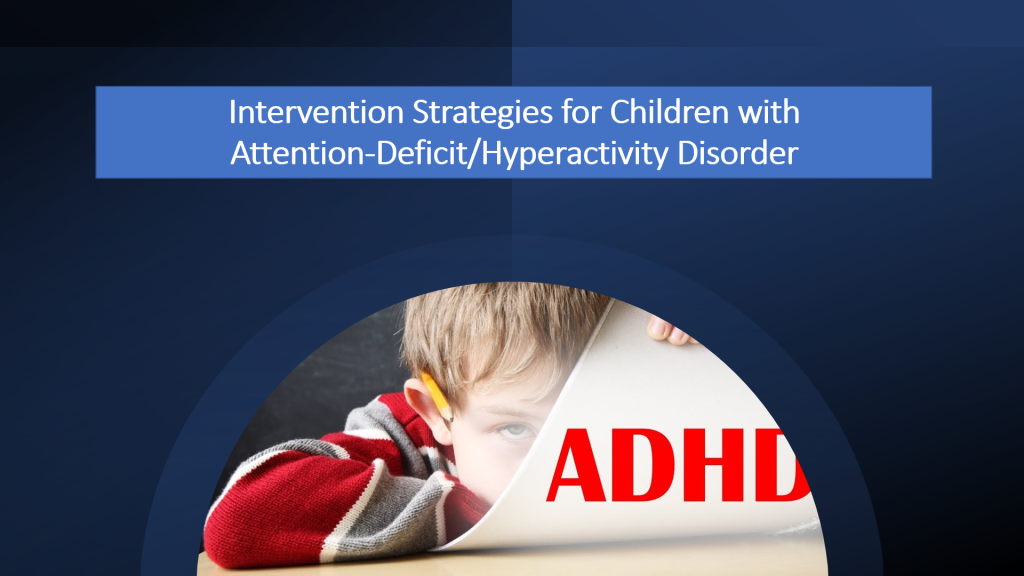
ADHD stands for Attention-Arrears/Hyperactivity Disorder. It is known equally 1 of the most common neurobehavioral disorders in children. Fox (2001) points out that ADHD is a term used to present people with behavioral impulsivity and low cocky-command and attention levels. There tin can exist many reasons why a child becomes inattentive and disruptive in class; yet, those presented with these behavioral problems tin can be regarded every bit possessing a form of ADHD (Meyer & Lasky, 2017). ADHD can significantly bear upon children's physical and emotional well-being, academic achievements, and interactions with others. Children with ADHD announced to feel significant difficulties in a range of functions. Even though impulsivity, inattention, and overactivity are common, they can serve as an attraction of other difficulties (DuPaul & Stoner, 2003). DuPaul and Stoner emphasize that children with ADHD ofttimes experience low academic accomplishment, a high level of not-compliance and aggression, and poor relationships. This social and emotional impairment dramatically affects the quality of their life (Wehmeier et al., 2010).
Therefore, understanding children with ADHD and taking appropriate interventions to support them are crucial to their hereafter success. This article offers some suggested school-based intervention strategies to back up children with ADHD.
There is no single verbal cause of ADHD that can be fully understood. According to the National Wellness Service (NHS) of the United kingdom of great britain and northern ireland, a combination of causes/factors is believed to contribute to ADHD, including genetics, brain function and construction, and other possible causes (NHS, 2018). The genes inherited from parents are an undeniable gene that explains the condition. Enquiry indicates that both parents and siblings of children with ADHD are four to 5 times more probable to have ADHD themselves (NHS, 2018). However, information technology is hard to understand how ADHD is inherited. Some differences in brain part and construction are also found in children with ADHD compared to those without ADHD (NHS, 2018). Other possible causes of ADHD include premature birth, low birth weight, brain damage, smoking and misuse of drugs during pregnancy, and exposure to high toxic levels (NHS, 2018).
Even though we can identify some characteristics of ADHD, it is not easy to be diagnosed because it is a highly hereditary neurobiological trouble characterized by behavioral difficulties that may vary in intensity. Environment, attitude, and internal motivation tin can influence behaviors (Meyer & Lasky, 2017). Therefore, a child must exist rigorously assessed. The American Psychiatric Clan (2013) provides a comprehensive list of criteria that can exist used to diagnose ADHD (see Appendix).
Suggested Schoolhouse-Based Intervention Strategies
Many studies reported that children diagnosed with ADHD feel considerable challenges with their academic life. They are at significant run a risk for poor academic accomplishment, behavior, and social interaction; therefore, a systematic and ongoing schoolhouse-based arroyo is necessary to assistance them succeed in school (DuPaul & Stoner, 2003). From here onwards, some suggested school-based intervention strategies to support children with ADHD will be discussed. The discussion will be based mainly on the piece of work of DuPaul and Stoner, who are leading researchers in the field of special education.
Self-management strategies
Self-direction is one of the effective schoolhouse-based intervention strategies used to help ADHD children develop appropriate self-control levels. Information technology is expected that this strategy volition exist able to equip ADHD children with age-advisable behaviors, both socially and academically. DuPaul and Stoner (2003) discuss two approaches associated with self-direction strategies. They are cocky-monitoring and cocky-reinforcement. Many children diagnosed with ADHD are capable of performing desired behaviors; nevertheless, they cannot perform stably for a sure flow of time because of personal bug with self-control (Brock et al., 2010). DuPaul and Stoner (2003, p. 166) claim that ADHD children "tin can exist taught to find and record the occurrence of their own behaviors" during academic work. For example, teachers can utilise auditory or visual stimuli periodically throughout a sure period of time to remind the children to observe their current behavior. Then children can be asked to tape their instances of on-job behavior using a grid or chart. With regard to self-reinforcement, information technology requires that children set their goals, self-assess, and evaluate their own performance. This arroyo may be appropriate for ADHD children at the secondary level (DuPaul & Stoner, 2003). For instance, token reinforcement programs and teachers' feedback are oftentimes used for the self-reinforcement. Nonetheless, designers of the cocky-management strategies must be aware that ADHD children may lack the skill to estimate and evaluate their own behavior; hence, they need to know how to use the system and be aware of the behaviors expected of them (DuPaul & Stoner, 2003).
The teaching of classroom rules and expectations
Children with ADHD will acquire all-time when articulate classroom expectations are fully communicated (Henderson, 2008). For amend management of behaviors, the teaching of classroom rules and expectations is imperative. Because ADHD children can quickly become disruptive, teachers must keep reminding them about the rules and expectations so that they can stay on the right track and get engaged in the classroom. For instance, teachers can (1) prompt students of expected behaviors before commencing classroom activities, (ii) clinch that every bookish and nonacademic activity and classroom routine are clearly communicated with and understood by students, (3) use nonverbal signals to redirect a student while working with other students, and (four) regularly communicate their expectations nearly the use of fourth dimension blocks (DuPaul & Stoner, 2003).
Study and organizational skills
Several studies reported that ADHD children usually feel difficulties in fulfilling tasks, organizing learning materials, post-obit instructions, and studying for exams (DuPaul & Stoner, 2003). Therefore, education them study and organizational skills will benefit them. Henderson (2008) recommends some necessary study skills for ADHD children to be taught. They include using Venn diagrams to demonstrate and arrange main concepts or data, taking notes of central concepts, creating an academic checklist for often made mistakes and homework supplies, so on. For organizational skills, Henderson (2008) suggests that teachers teach the children to use assignment notebooks to organize schoolwork and homework and use color-coded folders for dissimilar academic subjects and other purposes. Even though many strategies take been suggested and proved to be effective, teachers should select appropriate strategies that are workable in their own classroom contexts.
Peer tutoring
Peer tutoring is 1 of the most effective school-based intervention strategies to assist ADHD children and even children without this disorder with their academic progress. Peer tutoring is a flexible, peer-mediated strategy that involves students serving as academic tutors and tutees (Hott et al., 2012). Peer tutoring allows ADHD children to receive necessary one-to-1 assistance, gain more opportunities to respond in modest groups, obtain more fourth dimension to engage in tasks, and develop personal self-esteem. Peer tutoring will be nigh effective when participating children are guided appropriately (Greenwood & Delquadri, 1995; Piffner, 2011).
Figurer-assisted instruction
Calculator-assisted instruction (CAI) is an intervention strategy that is believed to be useful for teaching ADHD children. CAI involves the use of figurer programs or software to support classroom instruction. CAI has been used to develop students' knowledge and skills and enhance their academic performance (Miller, 2002). Alontaga et al. (2012) advocate that CAI provides ADHD children with a highly stimulating instructional environment where children gain immediate feedback on their performance, reinforcement, and ongoing opportunities to respond to academic stimuli. A study that investigated the effects of using math software chosen "Math Blaster" with iii primary male person students identified with ADHD indicated some meaning decreases in off-task behaviors because the three students appeared to engage more with the software (DuPaul & Stoner, 2003).
Task modification
Chore modification (TM) is used to enhance the academic performance of children identified with ADHD. TM involves reviewing aspects of learning (curriculum) to lessen inappropriate behaviors and increase proper classroom behaviors. Notwithstanding, Meyer and Evans (1989) debate that TM responds more positively only to the personal needs of individual students. Selection-making is one form of TM. It requires students to select activities from ii or more choices. Studies investigating the effects of choice-making on students with developmental disabilities have shown rises in social behaviors and reductions in excessively active behaviors (Dyer et al., 1990; Koegel et al., 1987 as cited in DuPaul & Stoner, 2003). Another study conducted by Dunlap et al. (1994) examined the furnishings of choice-making on three students; one of them was a 12-year-old male person ADHD pupil. The outcomes indicated that choice-making led to increased trustworthy task appointment and decreased overactive behaviors.
Instructional modification
Instructional modification (IM) is a necessary intervention strategy for didactics ADHD children. Modifications in teaching can exist carried out to improve the academic environment, specially for children with ADHD. A report conducted by Skinner and his colleagues (1995), as cited in DuPaul & Stoner (2003), examined the furnishings of two taped-words, fast-taped words (FTW) and wearisome-taped words (STW) intervention on word-reading performance based on accuracy rates. The report results indicated that there were relatively greater accuracy rates in STW intervention, suggesting that this intervention strategy exist constructive in promoting reading accuracy rate for ADHD students.
Strategy training
Strategy grooming involves teaching students to use a particular ready of strategies to complete academic work in enervating academic situations (DuPaul & Stoner 2003). This strategy seems suitable for adolescents with ADHD, as they are likely to nowadays poor organizational and study skills. For example, students with ADHD may face difficulties in note-taking for future review. Spires & Stone (1989) developed a note-taking strategy widely known equally Directed Notation-taking Activity. Students tin learn this note-taking skill through teacher-directed presentation/speech and prompts. It is believed that this note-taking strategy can level upwards on-task behaviors and academic operation of ADHD adolescents.
Contingency contracting
Contingency contracting, sometimes known as classroom beliefs agreement, is another school-based strategy for behavior management. It involves negotiating a contractual behavior agreement between a educatee and a teacher. Agreed behaviors are typically gear up along with positive and negative consequences when the desired behaviors are met and not met, respectively. Still, this strategy is relatively straightforward and might non be suitable for ADHD children aged under six due to some factors such equally inadequate dominion-following skills and an inability to filibuster reinforcement for a longer fourth dimension (DuPaul & Stoner, 2003).
Conclusion
Children diagnosed with ADHD face plenty of difficulties in their classroom behavior and academic performance, resulting in low academic achievement, complicated social interactions, and other behavior-related consequences. Regardless of any disorder labeling, each child has different needs and learning styles; they respond differently to different strategies and learning environments. Therefore, well-established school-based intervention strategies, including behavioral and instructional strategies, are required to ensure that every ADHD child'south chances for academic success are maximized. It is crucial that all stakeholders, including schools, parents, and the community, work together to back up ADHD children in their pursuit of academic and social success. Moreover, other interventions, such as medical interventions, behavior-related therapy, good parenting program, etc., should be used along with school-based interventions.
The Author
SOL Koemhong is currently a Japanese Government (MEXT) scholar pursuing a Doctor of Philosophy in Education at the Graduate School of Arts and Sciences of the International Christian University in Tokyo, Japan. He is also an Acquaintance Editor for the Cambodian Education Forum. In 2016, he was awarded a Chevening scholarship to undertake his Master of Arts in Education Management and Leadership at the University of Due south Wales in the Uk. Prior to leaving for Japan, he was a lecturer at the Faculty of Education of the Paññāsāstra University of Kingdom of cambodia. His research interests center on teacher teaching and policy, continuous professional development (CPD) for EFL teachers, school leadership, special education, and learning and teaching assessment.
References
Alontaga, J. V. Q., Lim, E., Balaji, Southward., Murugaiyan, 1000.Due south., Holly Deviarti, South. Due east., Heny Kurniawati, South.E., Yen Sunday, S.E., & Heri Sukendar, W.D. (2012). A estimator-assisted instruction module on enhancing numeracy skills of preschoolers with attention-deficit hyperactivity disorder,International Periodical of It and Business Direction,two(1), 1-15.
American Psychiatric Association. (2013).Diagnostic and statistical manual of mental disorders (DSM-5). Virginia: American Psychiatric Publishing.
Brock, S.E., Glove, B., & Searls, Thousand. (2010).ADHD: Classroom interventions. Maryland: National Clan of School Psychologists.
Dunlap, G., DePerczel, M., Clarke, S., Wilson, D., Wright, Southward., White, R., & Gomez, A. (1994). Selection making to promote adaptive behavior for students with emotional and behavioral challenges,Journal of Applied Behavior Analysis,27(3), 505-518.
DuPaul, G.J., & Stoner, K. (2003).ADHD in the schools: Assessment and intervention strategies (2nd ed.). New York: Guilford Publications.
Fox, G. (2001).Supporting children with behaviour difficulties: A guide for assistants in schools.London: David Fulton Publishers.
Greenwood, C. R., & Delquardri, J. (1995). Classwide peer tutoring and the prevention of school failure,Preventing Schoolhouse Failure,39(4), 21-25.
Henderson, K. (2008).Pedagogy children with attention arrears hyperactivity disorder: Instructional strategies and practices.Washington, D.C: U.S. Department of Teaching, Office of Special Education and Rehabilitative Services, Office of Special Teaching.
Hott, B., Walker, J., & Sahni, J. (2012).Peer tutoring. Retrieved from http://quango-for-learning-disabilities.org/peer-tutoring-flexible-peer-mediated-strategy-that-involves-students-serving-as-bookish-tutors
Meyer, L. H., & Evans, I. M. (1989).Nonaversive intervention for behavior problems: A transmission for home and community. Baltimore: Paul H. Brookes.
Meyer, H., & Lasky, S. (2017)Schoolhouse-based management of children with attending-deficit/hyperactivity disorder: 105 tips for teachers. Retrieved from https://www.addrc.org/disorder-105-tips-for-teachers/
Miller, Due south. P. (2002).Validated practices for pedagogy students with diverse needs and abilities. Boston: Allyn & Bacon.
National Health Service. (2018).Attention Deficit Hyperactivity Disorder. Retrieved from https://www.nhs.britain/conditions/attention-deficit-hyperactivity-disorder-adhd/
Piffner, L. J. (2011).All about ADHD: The consummate practical guide for classroom teachers (2nd ed.). New York: Scholastic.
Spires, H. A., & Rock, P. D. (1989). The directed note-taking activity: A self-questioning approach,Journal of Reading,33(1), 36-39.
Wehmeier, P. Yard., Schacht, A., & Barkley, R. A. (2010). Social and emotional harm in children and adolescents with ADHD and the impact on quality of life,Journal of Adolescent Health,46(3), 209-217.
Appendix: Diagnostic Criteria for ADHD (American Psychiatric Association, 2013, pp. 59-60)
People with ADHD show a persistent pattern of inattention and/ or hyperactivity-impulsivity that interferes with functioning or development:
A. Inattention: 6 or more than symptoms of inattention for children upward to age 16, or v or more for adolescents 17 and older and adults; symptoms of inattention have been present for at least 6 months, and they are inappropriate for developmental level:
- Often fails to give shut attention to details or makes careless mistakes in schoolwork, at work, or with other activities
- Oft has problem holding attention on tasks or play activities
- Often does not seem to listen when spoken to directly
- Ofttimes does not follow through on instructions and fails to terminate schoolwork, chores, or duties in the workplace (e.g., loses focus, side-tracked)
- Often has trouble organizing tasks and activities
- Often avoids, dislikes, or is reluctant to do tasks that require mental try over a long period of time (such equally schoolwork or homework)
- Oftentimes loses things necessary for tasks and activities (due east.thousand., school materials, pencils, books, tools, wallets, keys, paperwork, eyeglasses, mobile telephones)
- Is often easily distracted
- Is often forgetful in daily activities
B. Hyperactivity and Impulsivity: Vi or more symptoms of hyperactivity-impulsivity for children up to historic period 16, or five or more than for adolescents 17 and older and adults; symptoms of hyperactivity-impulsivity have been nowadays for at least 6 months to an extent that is disruptive and inappropriate for the person's developmental level:
- Often fidgets with or taps hands or anxiety, or squirms in seat
- Often leaves seat in situations when remaining seated is expected
- Often runs about or climbs in situations where it is not appropriate (adolescents or adults may be express to feeling restless)
- Oft unable to play or take role in leisure activities quietly
- Is oftentimes "on the go" acting equally if "driven by a motor"
- Often talks excessively
- Oft blurts out an answer before a question has been completed
- Oftentimes has trouble waiting his/her plow
- Frequently interrupts or intrudes on others (e.g., butts into conversations or games)
In addition, the post-obit conditions must exist met:
- Several inattentive or hyperactive-impulsive symptoms were present earlier age 12 years
- Several symptoms are present in two or more than setting, (such every bit at dwelling, school or work; with friends or relatives; in other activities)
- In that location is clear testify that the symptoms interfere with, or reduce the quality of, social, schoolhouse, or work functioning
- The symptoms are non better explained by another mental disorder (such as a mood disorder, anxiety disorder, dissociative disorder, or a personality disorder). The symptoms exercise not happen only during the course of schizophrenia or some other psychotic disorder.
Cambodian Education Forum (CEF)
CEF accepts no responsibility for facts presented and views expressed.
Responsibleness rests solely with the individual authors.
Published by CambodianEducationForum
CEF aims to provide a platform for Cambodian researchers, educators, teachers, students and administrators, especially novice and emerging writers, to express their views and share their perspectives and agreement on topics relevant to education in Cambodia and beyond.
Source: https://www.addrc.org/school-based-intervention-strategies-for-children-with-adhd/
0 Response to "Interventions You Can Use With Adhd Students in Math Classroom"
Mag-post ng isang Komento