You Can Never Go Home Again Chords Gangstagrass
Grant Green was one of the finest soloists to ever play jazz guitar. His playing was bluesy, full of bebop vocabulary, and swung hard no matter what situation he was in. Grant Green was a primary jazz guitarist of the highest level, and it is definitely a good thought to spend some time learning Grant Green licks in your jazz guitar exercise routine.
Known as a bluesy player (and subsequently on, the father of modern funk), Grant Light-green was also a talented bebop soloist who had a potent handle on bebop vocabulary and substitutions.
In this lesson, you will study Grant Green's guitar playing style. Y'all will learn several Grant Green licks, but beyond the licks, you'll learn the edifice blocks for each phrase so that yous know how to create your ain Grant Greenish-sounding licks.
If you lot are looking to go some classic blues licks under your fingers, expand your bebop vocabulary, and work on your swing all at the aforementioned time, and then Grant Green is the human being to report.
Lesson Contents
- Idle Moments
- Grant Light-green Lick 1 – 2 V I in F Major
- Grant Light-green Lick 2 – 2 5 I in F Major
- Grant Greenish Lick 3 – two V I in F Major
- Grant Green Lick iv – 2 5 I in F Major
- Grant Dark-green Lick 5 – Dominant
- Grant Green Lick 6 – ii V I in Bb
- Am7b5 over Cm7
- Ebmaj7 over Cm7
- The Altered Calibration
- C Minor Triad over F7
- Approach Notes
- Lower Neighbour Notes
- Grant Green Blues Solo
- Grant Green Soloing – Ascendant Chord Concepts
- V7alt Lines Going to Major
- Dominant Bebop Lines
- V7alt Lines Going to Minor
- Solar Solo
Idle Moments
Idle moments is the most famous tune on Grant Greenish's album Idle Moments, released in 1965. The vocal is written by pianoforte player and Bluish Note producer Duke Pearson.
In this section, you will learn the theme of Idle moments, which is a lot of fun to play.
Backing Rails
Listen & Play Along
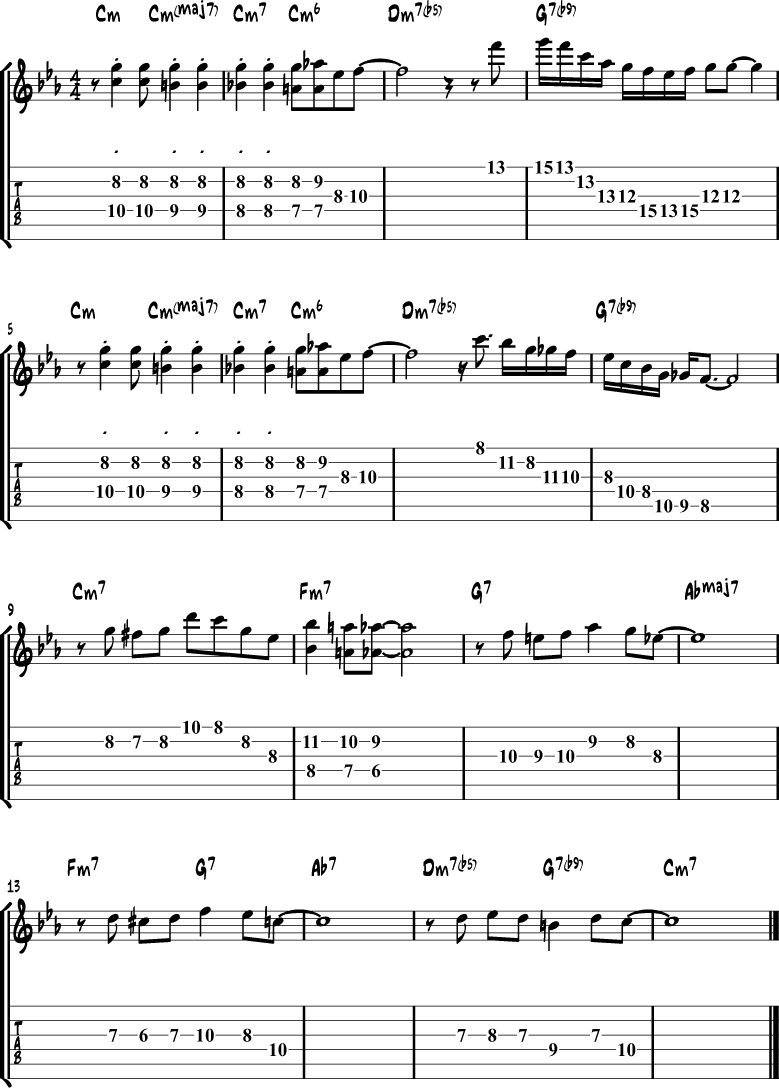
Grant Greenish Lick one – 2 V I in F Minor
This first lick uses ii classic Grant Green approaches to modest key ii-Vs.
- The Edim7 arpeggio in bar one implies a C7b9 chord. Edim7 outlines the tertiary, 5th, b7 and b9 of C7, creating a rootless arpeggio in this example.
- The descending notes (C and Bb) over the pedal notation K in the second half of bar one is another idiomatic Grant Light-green approach to edifice lines in this context.
Heed & Play Along
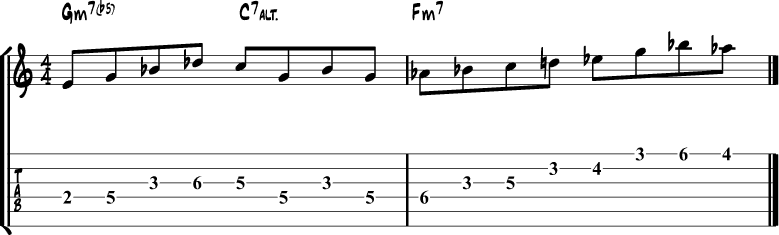
Grant Green Lick two – ii V I in F Major
The next lick uses the G melodic modest scale over Gm7 in bar one, implying a GmMaj7 sound.
Applying the melodic pocket-size calibration to the iim7 chord is a feature of Grant'due south playing, and it tin can be heard further during his solo over So What, where he uses melodic minor over large portions of that tune.
Listen & Play Along
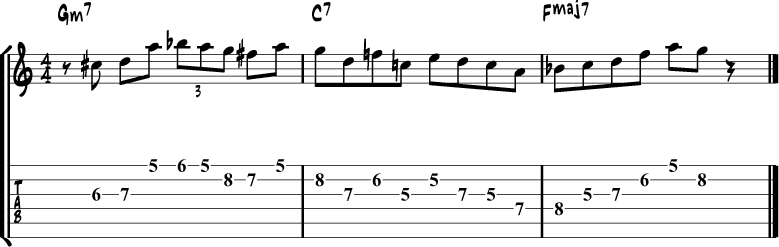
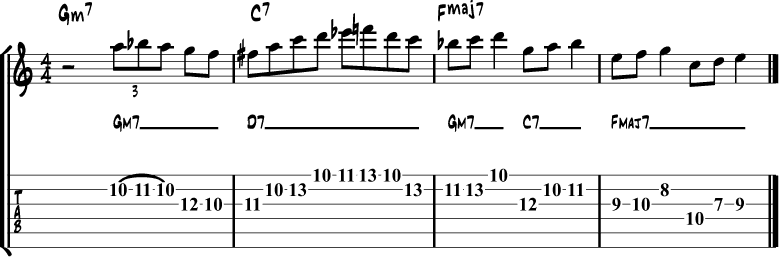
Grant Dark-green Lick 3 – ii V I in F Major
The next 2 V I lick uses a few chord substitutions to create a focus on the iim7 chord. In this case by playing Gm7-D7b9-Gm7, rather than outlining the written changes.
This type of commutation, playing a V7b9/iim7 in the centre of a 2 Five I, is something Grant Green loved to practice and it's a peachy way to expand your ii 5 I vocabulary.
Mind & Play Along
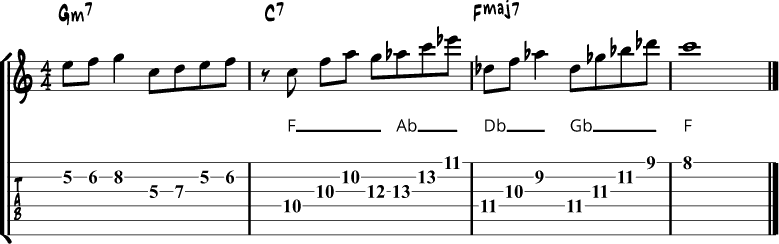
Grant Green Lick 4 – ii V I in F Major
This lick uses a quick turnaround substitution over the concluding two confined of the phrase.
Rather than just playing over the Fmaj7 chord that's in the progression, Grant would like to utilize turnarounds to create more interest over a static chord.
In this case, y'all can see the Imaj7-bIII-bVI-bII-Imaj7 turnaround being used. This turnaround progression is otherwise known every bit the Ladybird turnaround since information technology is the terminal 2 bars of the Tadd Dameron tune Ladybird.
Listen & Play Forth
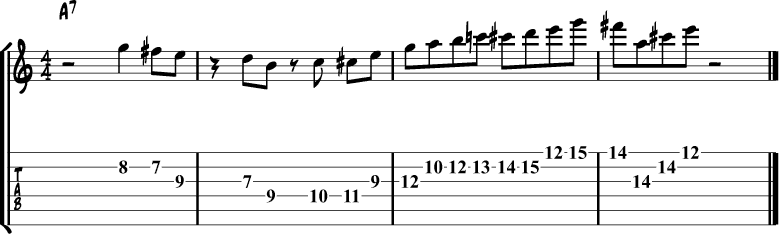
Grant Greenish Lick 5 – Dominant
This is a pretty straight-forward dominant 7 lick in the style of Grant Green.
Here are two items worth looking at further in your practicing:
- The first is the use of the note C (the b3) to create a bluesy sound over the A7 chord.
- The second is the last four notes. This is a common bebop phrase where y'all play one note (F#) and then want to play the note below it (E) but you lot get there past playing the diatonic ascending triad to that note (in this instance an A major triad).
Listen & Play Forth
Grant Green Lick half dozen – 2 V I in B Flat
Hither is a lick over a 2 V that goes to Bb7.
In that location's a lot going on in this lick, of which you will learn more than about below.
Listen & Play Along
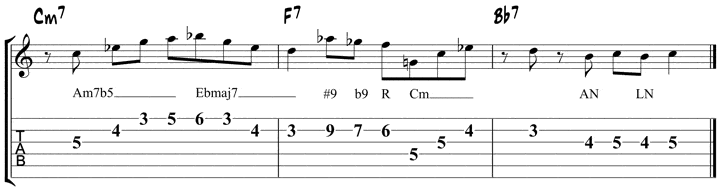
Here are the concepts used in this line that you can larn, practice, and expand upon in your soloing.
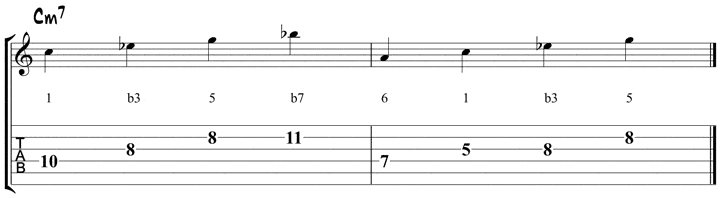
Am7b5 Over Cm7
The commencement concept in this lick has Grant Green using an Am7b5 arpeggio over a Cm7 chord.
When doing so, he creates a Cm6 audio in his line.
| Am7b5 | A | C | Eb | Chiliad |
|---|---|---|---|---|
| Played over Cm | vi | 1 | b3 | 5 |
As a rule, y'all tin apply a m7b5 arpeggio from the vi of a m7 chord to create a m6 sound in your lines.
Here'due south how that looks and sounds:
Mind & Play Along
Ebmaj7 Over Cm7
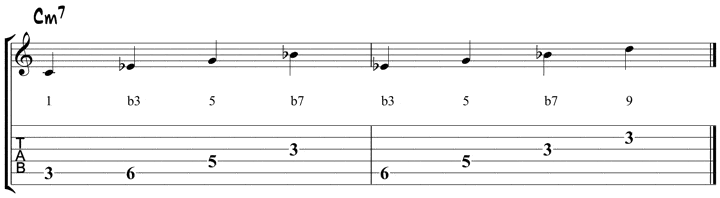
You tin can also play an Ebmaj7 arpeggio over a Cm7 chord, creating the intervals b3-5-b7-9.
| Ebmaj7 | Eb | G | Bb | D |
|---|---|---|---|---|
| Played over Cm | b3 | 5 | b7 | 9 |
Equally a rule, you tin can play a maj7 arpeggio from the b3 of any m7 chord to produce a rootless m9 sound.
Hither'south how that concept looks and sounds so you lot tin start to take information technology onto the guitar.
Listen & Play Forth
The Altered Scale
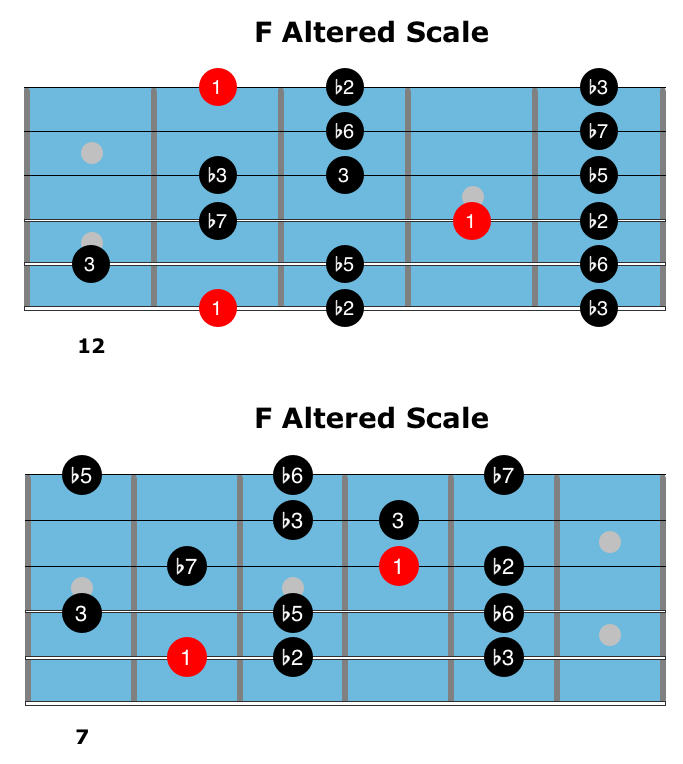
The altered scale is found in the solos of every corking jazz guitarist, including Grant Green.
Beneath information technology is seen in the #ix-b9 notes.
When used over 7th chords, the contradistinct scale highlights the b9,#9,b5, and #v intervals. Because of this, the calibration creates a lot of tension that you have to accost in your solos.
| F Altered Calibration | F | Gb | G# | A | Cb | Db | Eb |
|---|---|---|---|---|---|---|---|
| 1 | b9 | #9 | 3 | b5 | b13 | b7 |
Here are two fingerings for the altered scale to get you lot started with this of import sound on the guitar.
Listen & Play Along
Cm Triad over F7
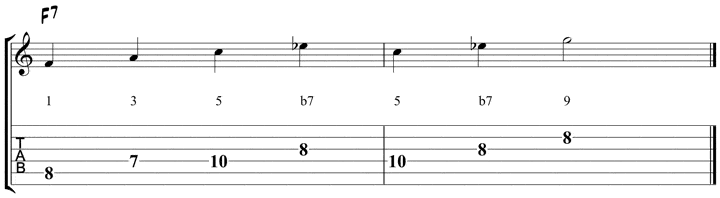
You also see a Cm triad over F7 in the line, which outlines the 5-b7-9 intervals of the F7 chord.
| Cm Triad | C | Eb | G |
|---|---|---|---|
| Played over F7 | 5 | b7 | ix |
Equally a rule, you tin can play a small triad from the 5th of any seventh chord.
Here's how that looks and sounds:
Listen & Play Forth
Approach Notes
Approach notes are chromatic notes that lead by half step into diatonic notes.
Well-nigh often they are used below diatonic notes, but you can also employ them above.
In this lick, yous see this equally the B-C notes in the last bar.
Here's how an approach note below looks like on paper:
Listen & Play Forth
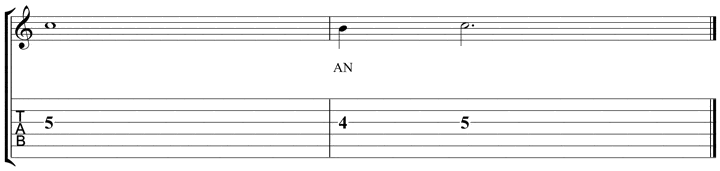
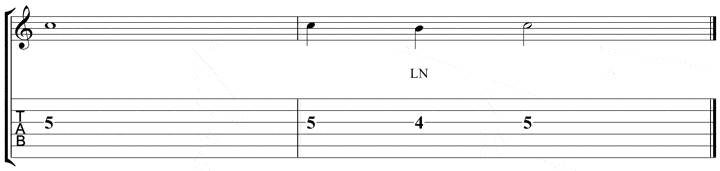
Lower Neighbour Notes
The last concept is the lower neighbour tone, which you tin run into as LN in the guitar tabs below.
Lower neighbor notes are when yous have a diatonic note (C for case), then you play a note just below that note (B) then back to the diatonic annotation (C).
So, C-B-C, with the B beingness the lower neighbor tone.
Here'south how that looks on paper:
Listen & Play Along
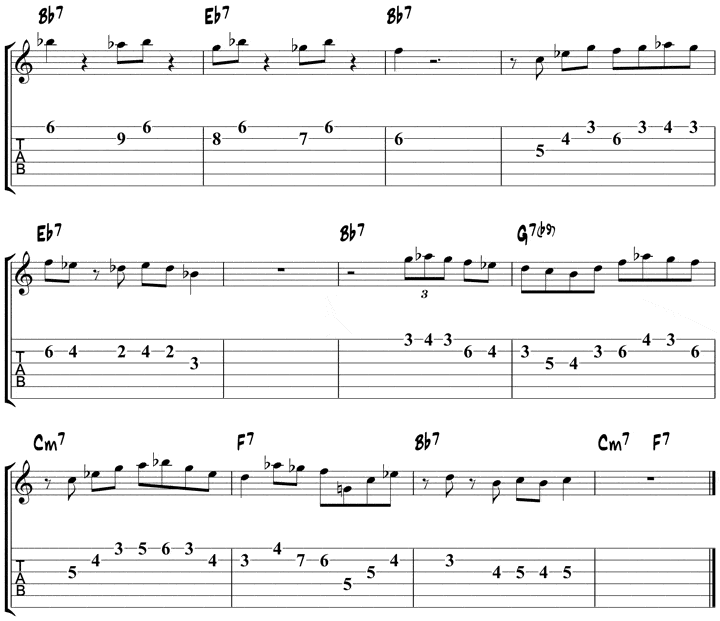
Grant Green Dejection Solo
To have this lick farther, hither's a jazz blues solo that uses typical Grant Green lines, too equally the verbal lick in the final 4 bars.
Learn the solo equally is, then brainstorm to integrate these ideas into your soloing vocabulary from at that place.
Backing Track
Mind & Play Along
Grant Dark-green Soloing – Dominant Chord Concepts
In this section, yous will focus on Grant Green's ascendant 7th concepts.
You'll zoom in on 3 principal ideas in this lesson. By working on V7alt lines in major and minor keys, as well as the dominant bebop calibration, you'll get a glimpse into the playing style of i of jazz'southward greatest guitarists.
Bank check these lines out, piece of work the concepts backside them farther in your playing, and when prepare, learn the sample solo at the cease of the section.
Grant Green Soloing – Major V7alt Lines
To begin your report of Grant Green dominant chord concepts, you volition look at how Grant added contradistinct notes to major key V7 chords.
Commonly you think of adding altered notes (b9, #9, …) to pocket-sized fundamental V7 chords, merely you can apply them in major keys as well.
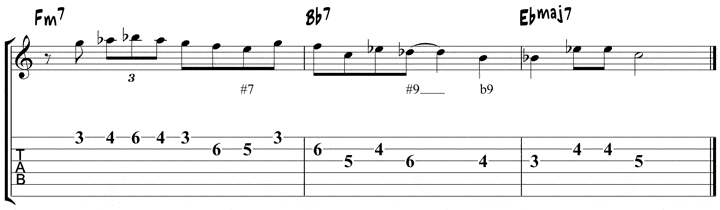
Here are two examples of Grant using V7alt chords to create tension and resolution in his major key ii V I soloing lines.
The beginning line uses the b9 and #9 over the V7 chord in a ii V I progression in Eb major.
Notice how the contradistinct notes are then resolved to the root notation of the underlying chord. As the root is a very stiff chord tone (the strongest in fact), this line has a stiff resolution.
This allows for the altered notes to create tension and resolution, rather than just tension, which can cause your lines to sound out of place without that resolution.
Listen & Play Along
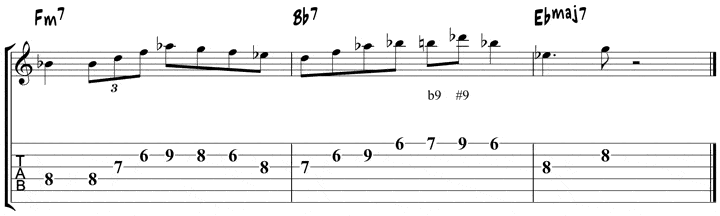
In this second major ii V I line, again the b9 and #ix are used over the V7 chord to create tension. These notes are resolved to the notation Bb, the 5th of Ebmaj7.
Aslope the altered notes, there's a raised seventh interval over the Fm7 chord, creating a melodic minor audio over this chord.
Listen & Play Along
Grant Green Soloing – Dominant Bebop Lines
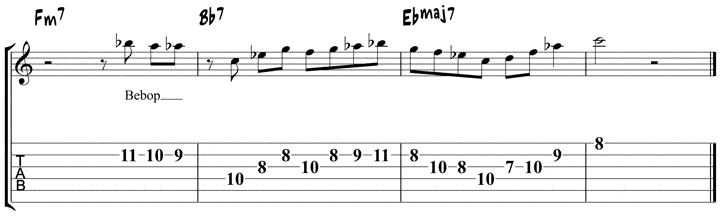
Another style that Grant liked to spice up his ascendant 7th lines is to use the dominant bebop scale over that chord.
The ascendant bebop scale is a Mixolydian scale with an added viith note.
| Mixolydian Scale | 1 | ii | iii | 4 | 5 | 6 | b7 | |
|---|---|---|---|---|---|---|---|---|
| Bebop Calibration | i | 2 | 3 | 4 | 5 | 6 | b7 | vii |
In this beginning bebop scale phrase, the Bb dominant bebop scale is used in bar 1, in anticipation of the Bb7 in bar two of the phrase.
Notice that the major vii interval (A) is placed on the 4th crush of the bar.
As long as y'all resolve the passing notation in a bebop scale you tin place information technology anywhere in the bar you please. But, if you lot don't resolve that note, either down to the b7 or up to the root, it'll audio out of place no matter where you use it in your line.
Listen & Play Forth
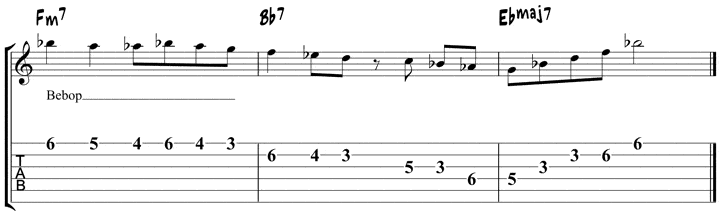
The next bebop line once again uses the Bb dominant bebop scale in bar i of a ii V I, where Grant is thinking V7-V7-I.
You'll notice the A (the bebop note) accented on beat two of the phrase, before existence resolved into vanquish iii on the Ab.
Listen & Play Along
Grant Green Soloing – Minor V7alt Lines
Too as using altered notes over major V7 chords, Grant besides brought these tension notes into his small-scale key solos.
In this section, you volition look at two ways to bring altered notes into your V7 lines:
- Dim7 arpeggios
- Adding b9 and #ix over the underlying chord
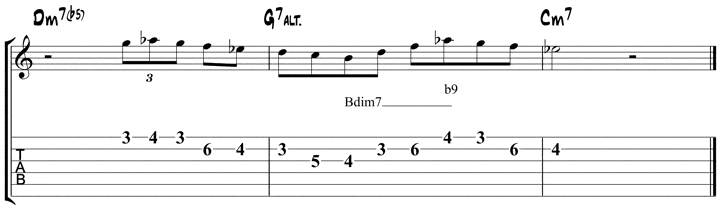
One of Grant's favorite ways to color V7 chords in a minor key is with a three to b9 arpeggio, which you lot tin see in the line below.
Past playing Bdim7 over G7alt, Grant highlights the three, five, b7, and b9 intervals of the underlying chord.
| Bdim7 | B | D | F | Ab |
|---|---|---|---|---|
| Played over G7 | three | 5 | b7 | b9 |
When soloing over ascendant chords, yous can always play a dim7 arpeggio from the 3rd of that dominant chord to create a b9 arpeggio.
Observe that hither Grant resolves that b9 into the root and down to the b3 of Cm7 (Eb).
Listen & Play Along
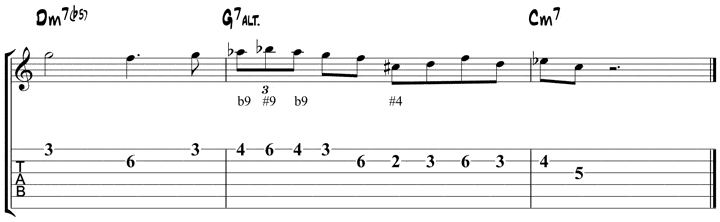
The next small-scale V7alt lick uses the b9, #9, and #four to create tension over that bar in the phrase, before resolving that tension over Cm7. Starting a V7alt line with a b9-#9-b9 triplet is a mutual way to add those tension notes to your lines.
From there, the C# (#4) is used as a lower neighbour tone, resolving up to the D (v) of the underlying chord.
Listen & Play Along
Grant Dark-green Soloing – Solar Solo
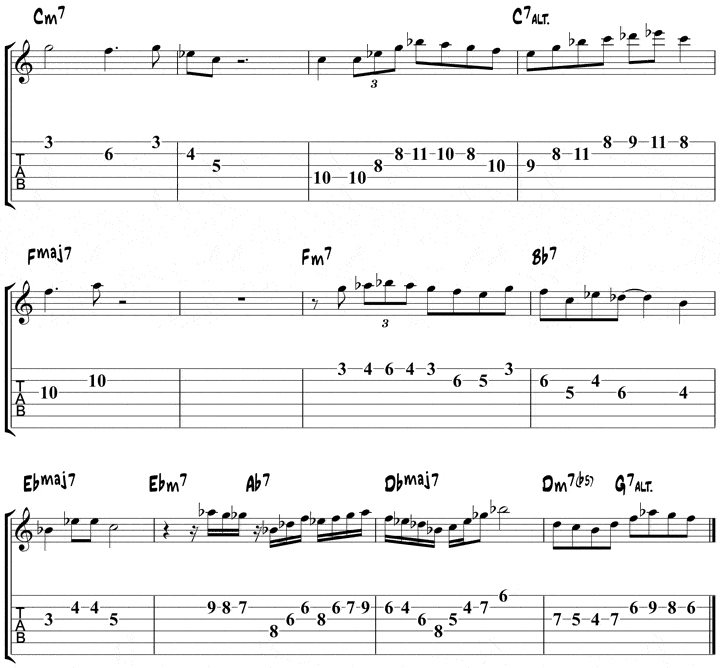
In this Solar solo, yous'll use well-nigh of the previous lines to create a one-chorus solo etude that you can learn and work into your own playing.
Observe the double-time lick in the terminal phrase, which is a lick you've already learned, though this time played twice as fast to fit into the space given to those chords.
When working on fast licks, such every bit 16th-notation phrases, yous can frequently simply take a normal lick and play it twice every bit fast. This approach is existence used here to squeeze that lick into two bars, rather than four bars.
Backing Track
Listen & Play Along

Source: https://www.jazzguitar.be/blog/grant-green/
0 Response to "You Can Never Go Home Again Chords Gangstagrass"
Mag-post ng isang Komento